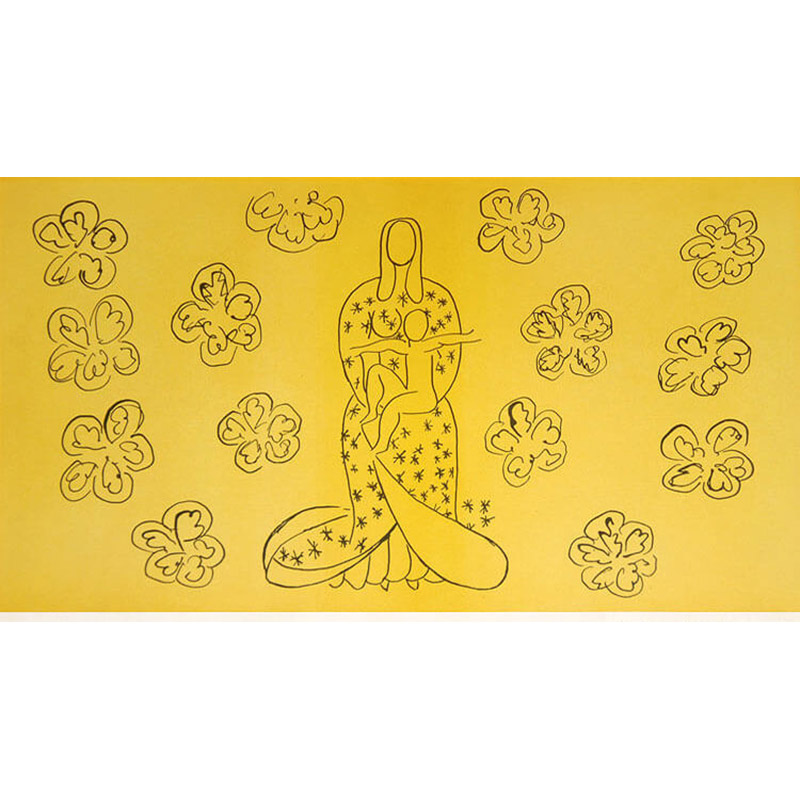
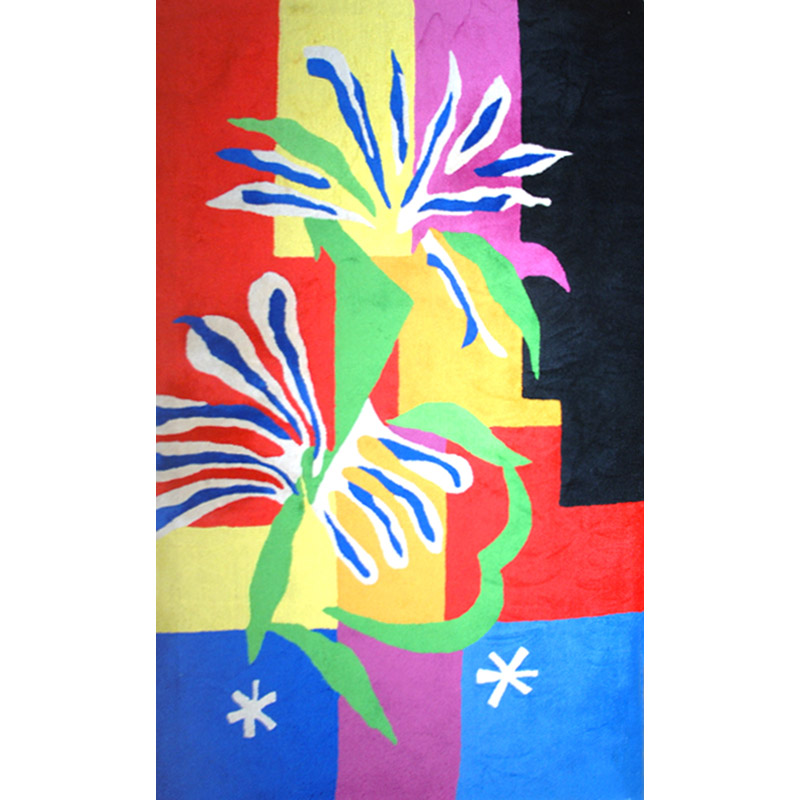

Henri Matisse continued making art right until the end of his life, Faced with chronic illness that left him housebound and in a wheelchair for the last decade of his life, Matisse was forced to innovate new ways to continue making art. He was unable to paint in the same way he used to, but he was far from ready to give up. His solution was to turn to scissors as his primary tool. Collages made from paper cut-outs dominated his apartment and his oeuvre as the artist adapted.
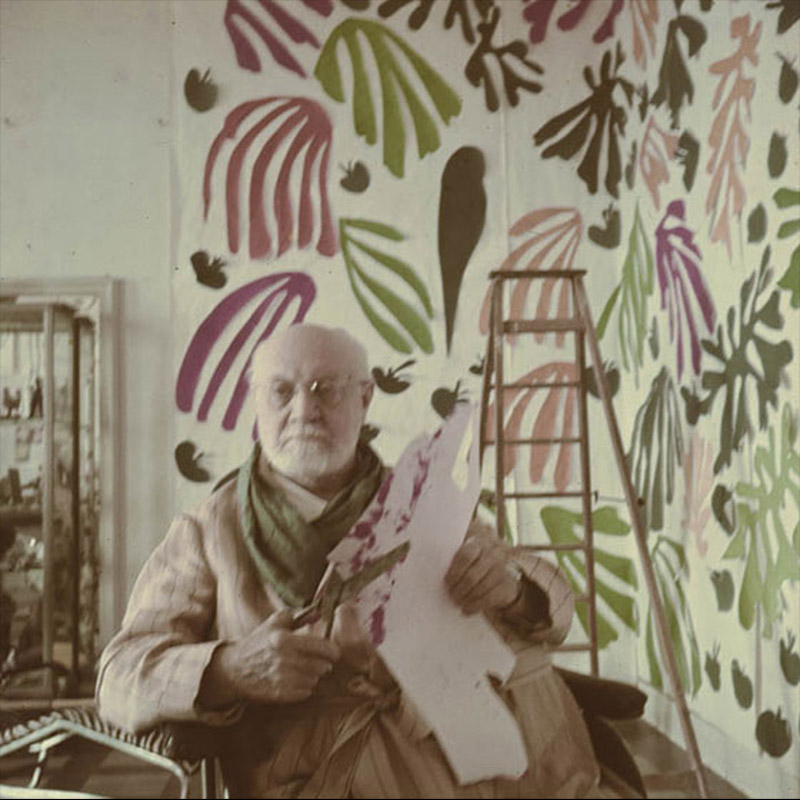
Matisse with scissors at the Hotel Regina, Nice, c. 1952
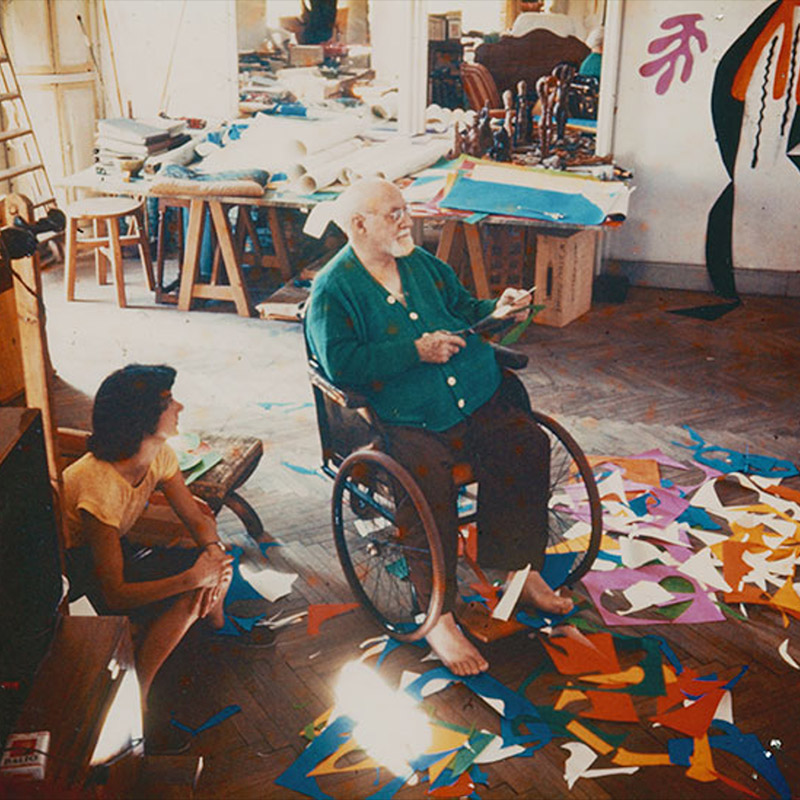
Matisse overseeing the composition of a cutout artwork, c. 1952
Matisse called this new technique “drawing with scissors.” Sitting propped up by pillows on his bed most days, he directed his assistants to paint paper with brightly colored gouache that he would quickly cut into a wide variety of motifs—figures, foliage, fish, birds, and more. Once the shapes emerged from the paper, they were collected by assistants that, per the artist’s instructions, would arrange them onto the artist’s walls before they were mounted permanently. Superb attention was paid to the placement of and relationship between the painted paper forms and Matisse oversaw the painting of each sheet of paper to ensure that each color met his specifications. The compositions are lively and spirited despite the fact that Matisse created the majority of them in bed and allowed him to continue experimenting with color, shape, line, and composition, carrying on the lineage of these ideas in his work with this novel technique.
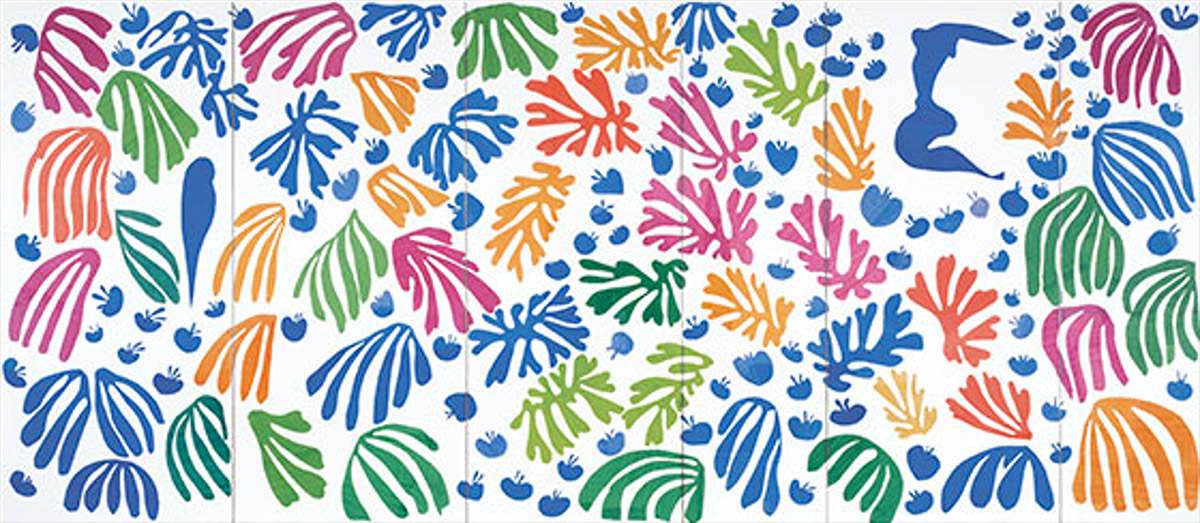
Henri Matisse, The Parakeet and the Mermaid (1952)
Not many of his cutouts would be shown during his lifetime. When they were first created, many of his contemporaries considered the paper compositions childish. Appreciation for the carefully crafted artworks has steadily grown over time, and Matisse’s cutouts are now recognized as powerful images that capture the life, joy, and essence of the great artist.
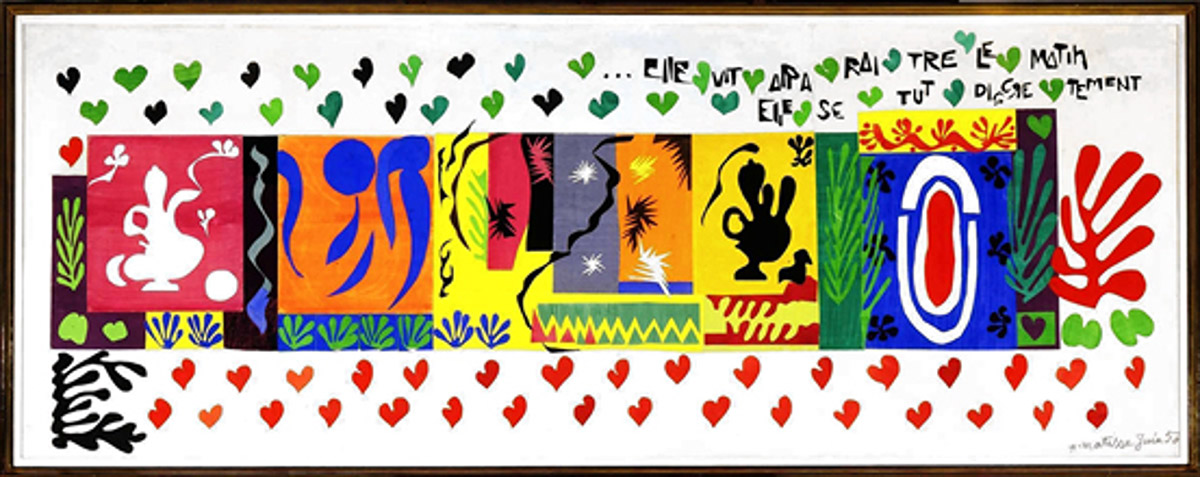
Henri Matisse, The Thousand and One Nights, 1950
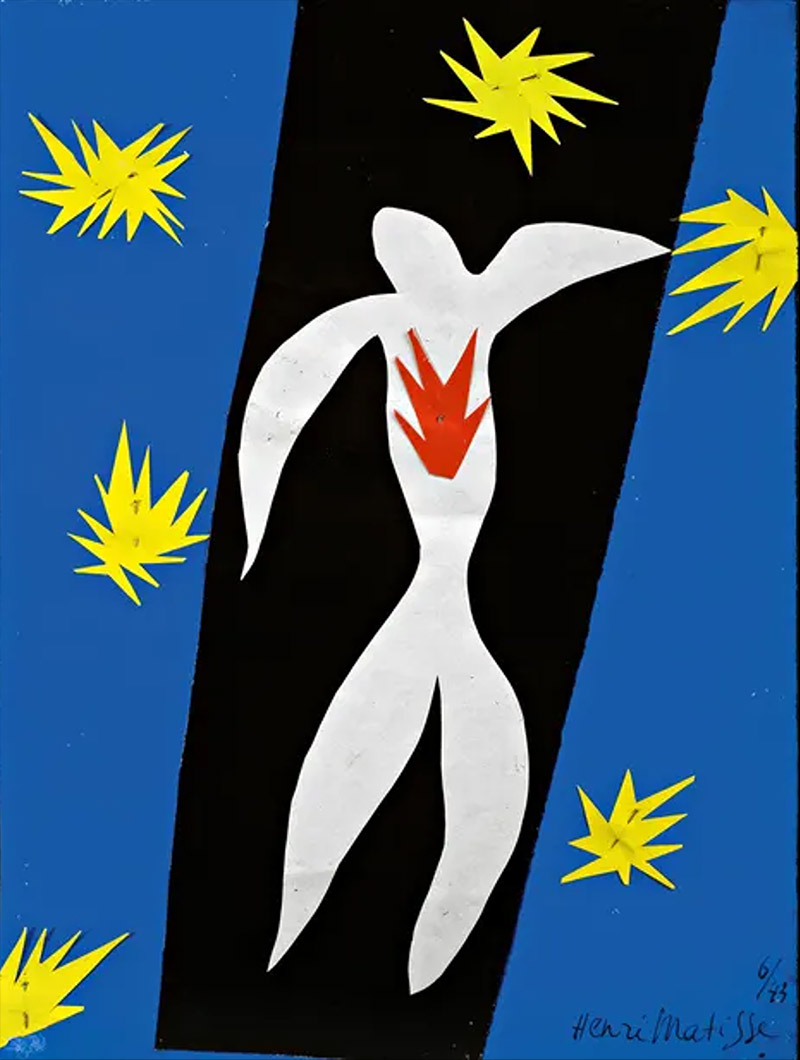
Henri Matisse, The Fall of Icarus (1947)